
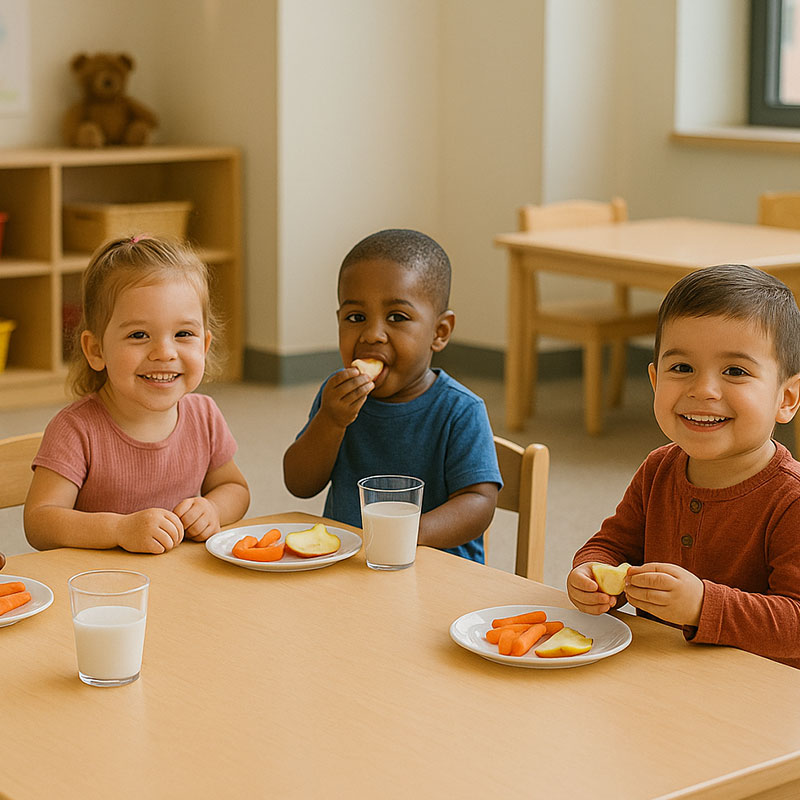
Early childhood is a remarkable period of growth and development. And good nutrition plays a critical role in shaping a child’s health, cognitive abilities, and lifelong eating habits. At Learning Zone, we provide nutritious meals and snacks every day. This is only one of the many reasons why we are considered one of the best childcare centers in Middle Tennessee.

At Learning Zone, we take food education further through our Seed-to-Table program. Children experience the full journey of food—from planting seeds in our “Grow Zone” to enjoying fresh produce at the table.
Busy days can make family meals challenging, but setting aside time to eat together promotes connection and sets a positive example.
As best childcare centers in Middle Tennessee, we are happy to share some tips with you to help you provide good nutrition at home.
Preschoolers are naturally curious and respond well to meals that are visually appealing. Including a rainbow of fruits and vegetables on their plates not only ensures a range of essential vitamins and minerals but also keeps mealtime exciting. Try carrot sticks, blueberries, cherry tomatoes, and steamed broccoli for added color and crunch.
Each meal should include a mix of carbohydrates, protein, and healthy fats. Whole grain breads, brown rice, or oats provide energy, while lean proteins like grilled chicken, beans, or tofu support muscle growth. Healthy fats from foods like avocado, olive oil, or nut butters are crucial for brain development.
Snacking is an important part of a preschooler’s day, but it should supplement—not replace—meals. Opt for snacks like apple slices with peanut butter, yogurt with fresh fruit, or homemade vegetable muffins.

Yes, and that’s intentional. Many families start reading to understand what quality early childhood education looks like and what children need at different stages. Even if you’re still exploring options, our blogs can help you feel more confident about what to look for in a childcare center and what questions to ask during tours.
Yes. Many early childhood challenges are a normal part of development, but they can still feel exhausting at home. You’ll find supportive strategies that respect your child’s emotions while also helping you set clear, age-appropriate boundaries. We also share guidance on common transitions, such as starting daycare, moving to new classrooms, and potty training readiness.
Not at all. Every post is designed to stand on its own, so you can jump into whatever topic feels most helpful right now. Many parents treat the blog like a resource library and return whenever a new stage or challenge arises. If you’re not sure where to begin, starting with the most recent posts is a great option.
New posts are added regularly, especially around the topics parents search for and ask about most. Some seasons focus more on routines and family schedules, while others dive deeper into behavior, development, and early learning. The best way to stay up to date is to check back often or subscribe when available.
Young children learn best through play because it’s how they naturally explore, practice, and repeat skills without pressure. Play strengthens language, early thinking skills, creativity, and social development in a way that feels enjoyable instead of forced. The blog helps explain what meaningful play looks like, so you can recognize learning even when it looks like fun.
No. Our content is meant to be helpful and informative, but it’s not a substitute for professional guidance. If you ever have concerns about your child’s health or development, it’s always best to speak with your pediatrician or a qualified specialist. Think of this blog as supportive education and a steady place to start.